Matilde Chierici
PhD thesis title: Development of an optimisation algorithm for demand-response in Renewable Energy Communities
Academic Tutor: Adriana Angelotti
Academic Supervisor: Francesco Causone and Martina Ferrando
PhD cycle: 40° (see all student profiles of the same cycle > LINK)
BSc: Building Engineering, Politecnico di Milano
MSc: Building Engineering, Politecnico di Milano
I chose to spend a research period of 6 months at Tongji University, Shanghai, because China offers a particularly stimulating context for studying the rapid development of renewable energy, electrification and smart urban systems. I believe that working in a different academic and cultural environment will help me approach my research from new perspectives, improve my skills and establish valuable international collaborations. I am especially interested in comparing different approaches to energy-community management and applying the knowledge gained abroad to my PhD project.
China Link Scientific Exchange Scholarship
Thesis abstract
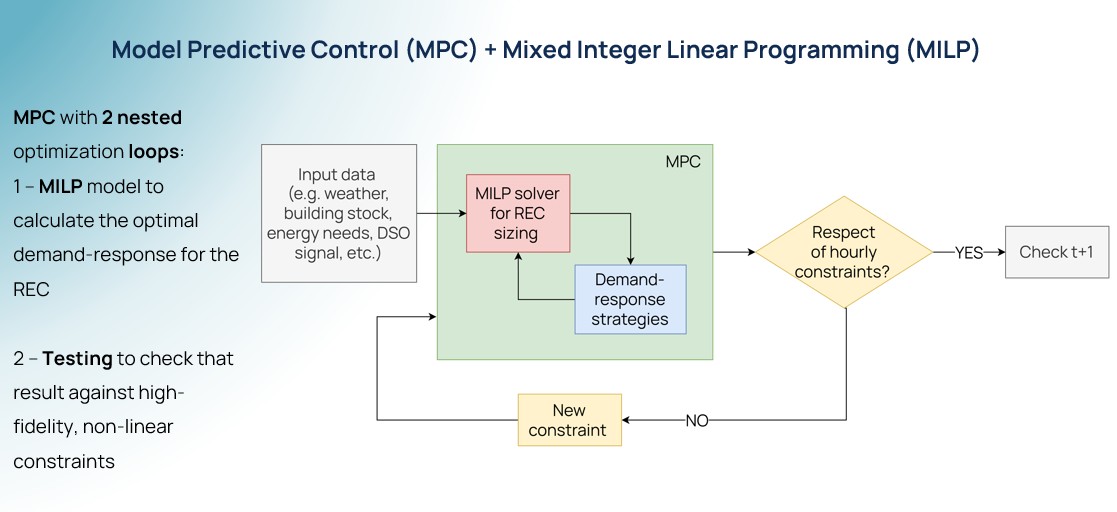
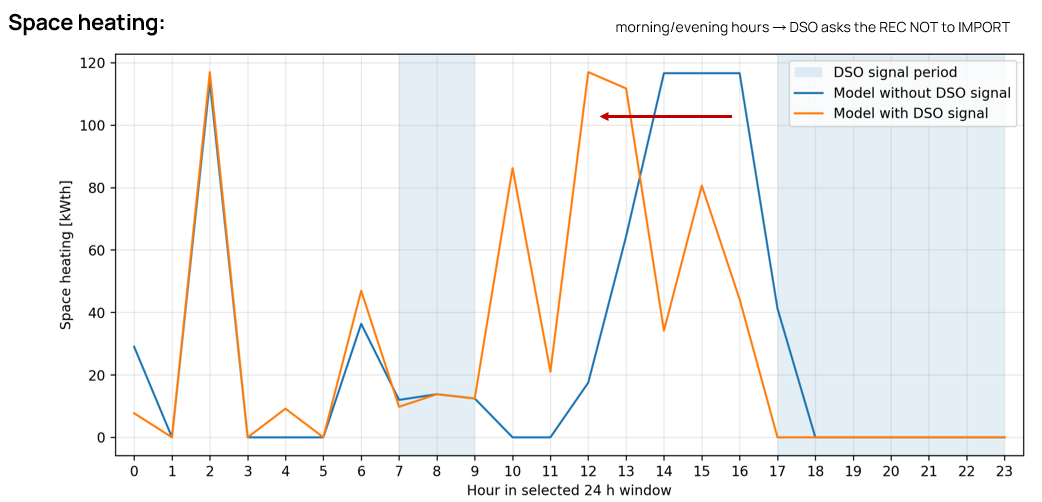
In my research, I develop an optimisation algorithm for hourly demand-response in Renewable Energy Communities. I combine Model Predictive Control and Mixed-Integer Linear Programming to coordinate buildings, electric vehicles, batteries and other flexible assets while respecting thermal comfort, grid limits, battery degradation and Distribution System Operator signals. I test the method on multiple energy communities across the world, aiming to increase local renewable-energy use, reduce grid congestion and support reliable, cost-effective community operation.
Personal interest in my research theme
I chose this topic because the energy transition requires solutions that connect renewable generation, buildings, mobility and power grids in a practical way. I am especially interested in how optimisation can turn flexibility into measurable environmental, technical and economic benefits without compromising users’ comfort. What motivates me most is the combination of rigorous modelling with a real local case study, where my research can contribute to scientific progress and the development of more resilient energy communities.